Universal has officially announced a new addition to its growing portfolio of immersive destinations: a year-round horror attraction in Chicago. Set to open in 2027, this experience marks a major expansion of Universal’s permanent horror concept following its Las Vegas debut and further solidifies the company’s aggressive push into markets far beyond the traditional theme park model.
The Chicago venue is more than just a new outpost—it’s a statement. It signals that Universal is no longer content to be seen as the second player behind Disney. Backed by the massive financial strength of its parent company, Comcast, Universal is making bold, calculated moves that are reshaping the future of the themed entertainment industry. And with competitors like Disney, Merlin Entertainments, and the newly merged Six Flags–Cedar Fair group all looking to protect their turf, the stakes have never been higher.
A New Home for Horror in the Midwest
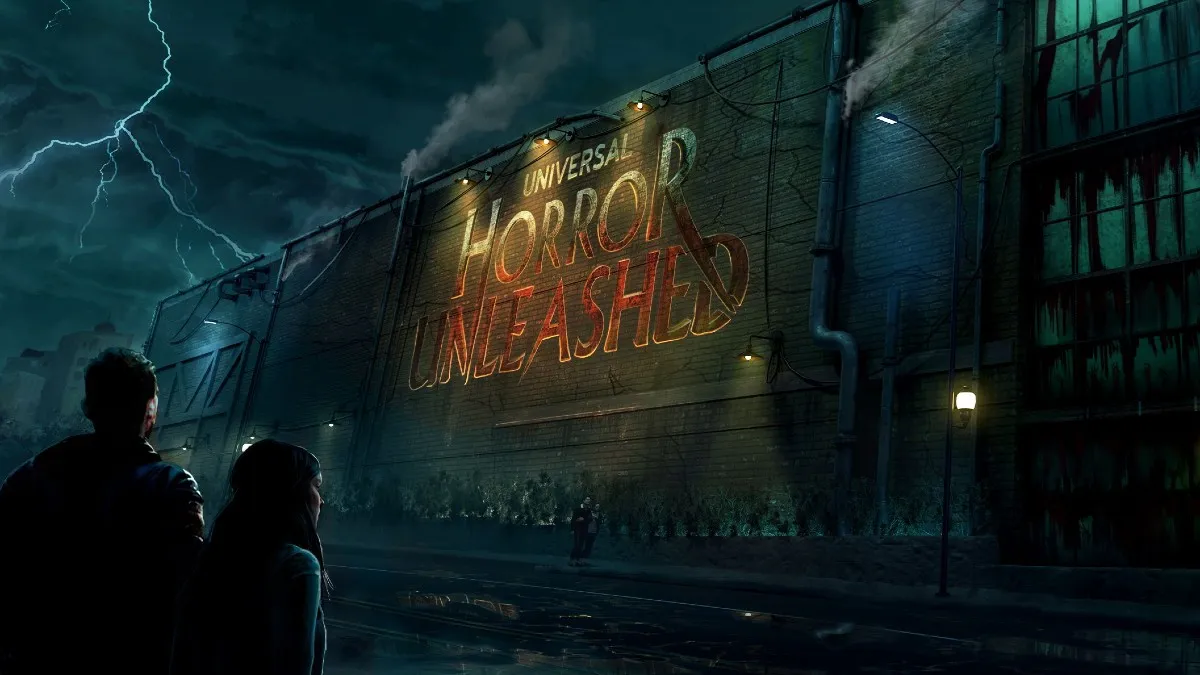
Universal’s new location will take over a former commercial property at 700 West Chicago Avenue, adjacent to Bally’s Casino. The space will be transformed into a permanent, fully immersive horror destination operating year-round. Think of it as Halloween Horror Nights distilled into a self-contained experience—accessible not just for a few weeks every fall, but 365 days a year.
Modeled after the “Universal Horror Unleashed” attraction in Las Vegas, which is scheduled to open August 14, 2025 at Area15, the Chicago site will feature a rotating lineup of horror mazes, live scare-actors, themed bars and dining, and an integrated retail space. What sets it apart from seasonal events is its permanence. Guests can return again and again to explore new stories, new characters, and new nightmares. Universal has confirmed that the venue will include both original concepts and established intellectual property from its vault of horror franchises, such as Universal Monsters, The Purge, and The Exorcist.
This move taps into a growing audience of adult theme park fans who crave elevated, immersive, and story-driven experiences. Universal has already proved that horror is a viable standalone business with Halloween Horror Nights consistently selling out in both Orlando and Hollywood. Bringing that experience to Chicago, with a format that invites year-round visitation, is a clever way to expand market share in a major metro area underserved by high-end themed entertainment.
A Strategic Growth Blueprint
Universal’s expansion into Chicago isn’t a one-off. It’s part of a much larger strategy being rolled out across the globe. The company is in the midst of what may be its most ambitious decade of growth since Universal Studios Florida first opened in 1990.
The centerpiece of this strategy is Epic Universe, the third gate at Universal Orlando Resort, which officially opened on Thursday, May 22, 2025. The project represents an estimated $7 billion investment, one of the largest single capital deployments in theme park history. The park features cutting-edge themed lands like Super Nintendo World, the Ministry of Magic from the Wizarding World franchise, and Universal Monsters. Analysts have projected that Epic Universe alone could attract up to 15 million visitors annually, potentially siphoning guests away from nearby Disney resorts.

But the expansion doesn’t stop there. Universal is building a kid-focused resort in Frisco, Texas. It has launched its first horror destination in Las Vegas. And in June 2025, the UK government confirmed plans for a Universal-branded theme park near Bedford, England, marking Universal’s entry into the European market. The estimated public-private investment on that project—including roads, rail, and infrastructure—could reach £50 billion in economic impact over the next two decades.
Additionally, Universal is developing projects in India and has announced multiple expansions in its existing Beijing park. In just a few years, Universal has gone from operating a handful of parks to developing an international network of destinations tailored to different demographics—from families and children to horror superfans.
Comcast’s Billions Behind the Curtain
None of this would be possible without Comcast. As the parent company of NBCUniversal, Comcast has given Universal’s theme park division the financial runway to grow rapidly and without compromise. While some media conglomerates have pulled back from large-scale investments, Comcast has leaned in, understanding that theme parks represent not only a reliable source of revenue, but a powerful engine for promoting intellectual property.
In 2023, Comcast reported more than $4 billion in free cash flow in a single quarter. Its Parks and Resorts division has consistently delivered high margins and now accounts for nearly half of the company’s adjusted earnings before interest, taxes, depreciation, and amortization (EBITDA). Comcast increased capital expenditures for its theme parks by nearly 30 percent year-over-year in 2024, funding ongoing construction, land acquisition, and operational scale-ups in multiple markets.
Comcast CEO Brian Roberts has made clear that parks are a long-term growth area. The logic is simple: unlike streaming or broadcast media, theme parks are difficult to disrupt. They’re physical, high-barrier assets with strong pricing power and proven demand. As long as people want experiences they can’t replicate at home, Universal’s parks—especially those offering horror, fantasy, and interactivity—will remain attractive.
Closing the Gap with Disney
Of course, Universal’s most obvious competitor remains Disney. While Disney still leads in global attendance and revenue, Universal is catching up fast. With Epic Universe now open and drawing crowds, many analysts predict Universal’s Orlando attendance could match or even surpass Disney’s for the first time in decades.
Disney has pledged $60 billion over the next 10 years to expand its theme parks and cruise lines. Projects include a new Avatar land at Disneyland, a Coco-themed experience, and multiple resort upgrades. However, many of these projects are still in early planning stages. Meanwhile, Universal is building now. Its ability to move quickly—thanks to Comcast’s backing and fewer bureaucratic hurdles—gives it a competitive edge.
Disney also remains heavily reliant on its core family audience, while Universal has been expanding aggressively into other niches. Horror, gaming, adult nightlife, and storytelling rooted in non-Disney IP are all areas where Universal has found room to differentiate and grow.
The Merlin and Six Flags Factor
Beyond Disney, Universal is also competing with mid-tier players like Merlin Entertainments and the combined Six Flags–Cedar Fair group. Merlin, the operator behind Legoland, Madame Tussauds, and the Dungeons attractions, excels at creating compact, location-based entertainment in urban centers. But unlike Universal, Merlin does not own large-scale resorts or massive theme parks with multi-day draw. Their focus is squarely on regional, often indoor attractions designed for short visits.
The Six Flags and Cedar Fair merger, finalized in 2024, created the largest operator of amusement parks in North America. Combined, they offer seasonal events like Fright Fest and Haunt, which have built loyal followings. However, these offerings are generally seasonal, lower budget, and more reliant on traditional thrills than deeply immersive storytelling or high-end production. Universal’s Chicago attraction, by contrast, is designed for year-round operation with ever-evolving content. It’s an entirely different kind of product—more akin to live theater or immersive cinema than a regional haunted house.
The Future of Fear in Chicago
For Chicago, the new horror attraction offers more than just a place to scream. It’s an economic engine, cultural addition, and a new reason to visit the city. Officials have estimated the project will generate over $1 billion in long-term economic impact, with hundreds of jobs created in hospitality, entertainment, and operations. It also adds a world-class attraction to a city better known for sports and architecture than themed entertainment.

More importantly, it’s a signal of where Universal is heading. Themed entertainment is no longer confined to the boundaries of a single resort. It’s becoming distributed—tailored to the cities people live in, accessible year-round, and flexible enough to change constantly. Chicago is just the beginning. As the company refines the horror model, we’re likely to see similar venues in other urban markets across the U.S. and abroad.
Follow the Fear
The race is on, and Universal isn’t just keeping pace—it’s setting the tempo. With Comcast’s billions behind it, a clear vision for the future, and a willingness to invest in new markets and formats, Universal has proven itself as a force to be reckoned with in themed entertainment. Its upcoming horror experience in Chicago promises to raise the bar yet again, delivering spine-tingling thrills, original storytelling, and unmatched production value.
Whether you’re a local thrill-seeker or a horror fan who travels for the scream, you’ll want to keep this one on your radar. And with more announcements on the horizon—from Halloween Horror Nights to Universal Destinations across the globe—you’ll want to stay plugged in.
Be sure to follow We Love Attractions on Facebook for breaking updates on the Chicago horror experience, Halloween Horror Nights news, and everything Universal has in store for thrill seekers worldwide.