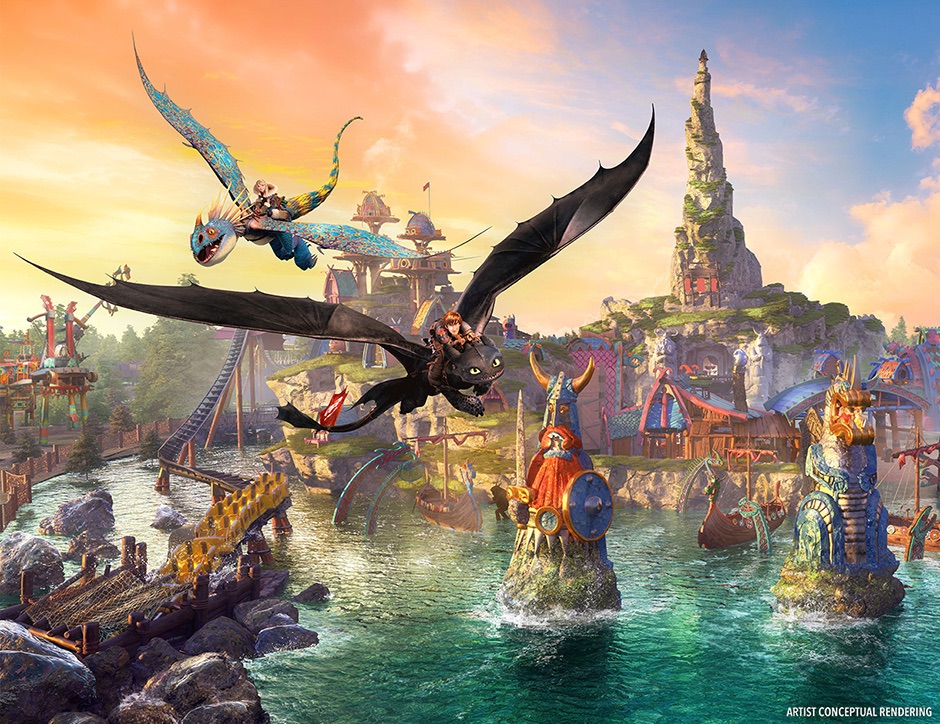
The highly anticipated debut of Universal’s Epic Universe in Orlando has drawn immense buzz from theme park fans around the world, not just for its collection of lands and attractions but also for one particular spectacle that stirred the imagination early on: the flying dragons.
In early construction previews, permit filings, and concept art for the park, it became evident that Universal intended to incorporate drone-based flying creatures—specifically dragons—into the immersive atmosphere of the new land How to Train Your Dragon: Isle of Berk. Yet, despite the months of buildup and growing speculation, the dragons have yet to take to the skies since Epic Universe officially opened. Their absence has left fans wondering: what happened to Universal’s flying dragons?

A Likely Partnership with Sky Elements
Though Universal has not officially confirmed which company was building the dragons, many industry watchers believe Sky Elements, a Texas-based drone light show company known for its innovative aerial displays and record-breaking performances, was likely involved in some capacity. Sky Elements has made headlines over the last few years for their high-profile drone shows, including launching pyrotechnics from drones—a first in the United States—and performing thousands of drone formations across major cities and events. Their skill set and technological advancements seem to align perfectly with the type of show Universal was teasing.
Sky Elements’ specialty lies not just in synchronized drone light displays, but in pushing the boundaries of what drones can do in live entertainment. In 2023, they were granted a rare FAA waiver allowing them to attach and deploy pyrotechnics from drones, creating hybrid aerial fireworks and light shows. These “pyro drones” quickly became a hallmark of their larger shows, combining fire, color, and synchronized motion in the sky. It is not hard to imagine how this technology could be adapted into something resembling a fire-breathing dragon—especially in a theme park setting where showmanship and immersion are paramount.
The Early Promise of Flying Dragons
The idea of flying, fire-breathing dragons above a theme park was an exciting prospect. Video footage and internal testing documents from earlier phases of Epic Universe development showed what appeared to be large winged drones shaped like dragons in testing. The drones featured articulating wings and tails, suggesting they were more than just shaped lighting rigs. They were animated, possibly pyrotechnic-equipped, and designed to appear as living creatures soaring above the Isle of Berk.
But sometime in mid-2024, those tests seemed to stop. Permits related to nighttime aerial activity went quiet. Drone sightings over the park disappeared. And when Universal’s latest promotional material for Epic Universe began rolling out in early 2025, the dragons were noticeably absent.

The Lake Eola Incident
Complicating the story further was an incident that took place in downtown Orlando at Lake Eola in late 2024. During a Sky Elements-produced drone show, one of their drones reportedly malfunctioned and fell into the crowd, striking a young boy and sending him to the hospital. While the boy thankfully survived, the incident sparked a wave of public concern and scrutiny over drone safety at live events—particularly in family-friendly environments like theme parks. The story made local news and was widely discussed on social media. Though neither Sky Elements nor Universal publicly connected the incident to Epic Universe, it’s difficult to ignore the potential impact such a high-profile drone failure might have had on Universal’s confidence in proceeding with an ambitious and technically risky drone-based dragon show.
A Quiet Delay or a Canceled Vision?
There are several theories as to why the dragons haven’t flown. One possibility is that a technical or safety incident occurred during testing. Drones of this size and complexity, especially those equipped with pyrotechnics or articulating body parts, present unique challenges. Wind resistance, battery limitations, RF interference in a busy park environment, and flight path safety around guests are just a few of the factors that could make such a project difficult to execute reliably. If a drone were to malfunction or lose control during a crowded park day, the consequences could be severe. Universal, known for its cautious and safety-first approach to show technology, may have pulled the plug or temporarily paused the program due to such concerns—possibly reinforced by the Lake Eola accident.
Another possibility is a quiet breakdown in the relationship between Universal and Sky Elements, if in fact they were working together. Universal is famously tight-lipped about its vendors and partners, often preferring to market technology and innovation under the Universal banner rather than giving public credit to third parties. If creative or technical disagreements occurred, or if Universal felt that the vendor couldn’t deliver the spectacle at the level they required, they may have chosen to scrap or postpone the project entirely. There are whispers in the themed entertainment industry that Universal was disappointed with the results of early dragon tests, either because the technology wasn’t show-ready or because it didn’t match the fluid, cinematic quality of the rest of Epic Universe.
It’s also possible that the dragons were never meant to be part of the opening slate of shows but instead planned for a later phase. Universal has historically phased in nighttime entertainment and new technology once parks are operational and guest flow has been established. It could be that the dragons are simply delayed, not canceled, and will make their appearance once Universal has more data on how guests interact with the park space at night and whether aerial shows can be safely accommodated.
Still, some parkgoers who witnessed early tests describe the dragons as “jaw-dropping” and “unlike anything seen in a theme park before.” If Sky Elements was indeed behind the dragons, it would make sense—the company has a track record of delivering breathtaking displays on a massive scale. They are known for telling stories in the sky, and animating a dragon would be well within their creative wheelhouse.

Will We See the Dragons Again?
For now, fans are left to speculate. Universal remains silent on the matter, and Sky Elements has made no public comment about any partnership. The skies over Epic Universe remain dragonless—for now. But hope lingers. Perhaps the dragons will return in a retooled form, or perhaps Universal is preparing something even more impressive behind the scenes.
One thing is certain: in the world of theme parks, silence doesn’t mean abandonment. It often means perfection is still in progress.